Pages

Search This Blog

Wednesday, July 13, 2011

New Album from The Drums - 'Portamento'


The Drums will drop new album Portamento, the follow-up to last years self titled debut on September 12th in the UK.  Plans for a US release haven't been finalized, but more details should surface soon enough.  I had the chance to check out their high-energy show at Bonnaroo and if their studio album can capture that effect, we should be in for something special.

Check out their first single "Money", below.

The Drums - Money by WorkItMedia

Monday, July 11, 2011

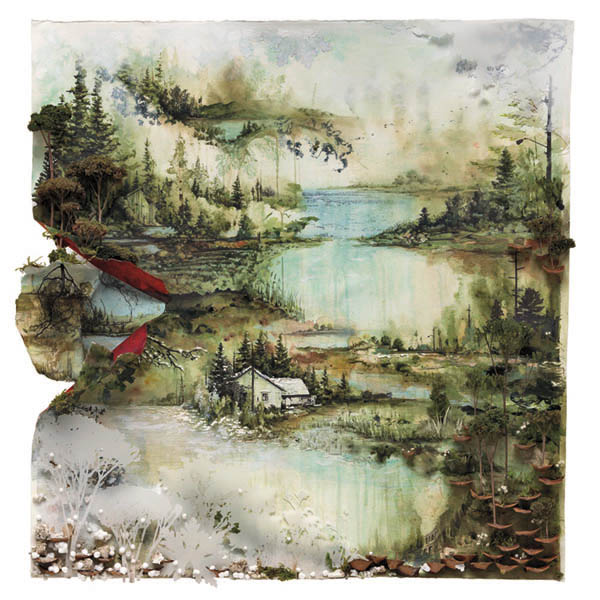
Bon Iver - 'Bon Iver'


Jagjaguwar; 2011
Our Take - 8.6

I wish I could review Bon Iver's new album having never heard For Emma, Forever Ago (2008). It's nearly impossible not to drag all your preconceived notions of what you think Bon Iver should sound like when you give their second album its highly anticipated first listen. But before pressing play on the album I would encourage any listener to suppress the guilty self-indulgent urge that seeks to pinpoint and restrict our heartbroken hero, Justin Vernon, to his ramshackle snow-covered cabin in Wisconsin. The results will be more than fair and deserving for both artist and listener. And since my initial fantasy will forever remain in my dreams, I should probably get on with it and discuss the album itself.

"Perth" begins the album sounding eerily like something that would fit well somewhere within the nine solid tracks of For Emma, potentially extending the iconic isolated feel of that most enchanting album. But within seconds the music takes its most defining turn; a choir of voices leaks to the foreground and a steady drum begins its march to drive the music forward. "So I'm ridding all your stories" Vernon shouts perhaps attempting to destroy the very myth he created in those Wisconsin woods, or at the very least he's starting to move away from it so as to begin again and restructure something entirely new ("you're breaking your ground"). Eventually the music builds to a satisfying climax complete with strings and brass sections only to fall back down, rebuilding itself again from the lowest registers of Vernon's rich baritone voice into something completely remarkable and fresh in "Minnesota, WI."

The lyrics on Bon Iver are, well, lyrical. It's difficult (but not impossible) to extract and piece together coherent narratives or stories throughout the album, which is probably a solid directional move for the band given the powerful hype created by For Emma (let's face it, the album has practically become folklore to a large community of bona fide Bon Iver-believers). A big portion of Vernon's lyrics have an inherent improvisatory feel to them which makes me wonder just how many of these lyrics were ad libbed in the studio. A more free-style approach to lyric writing places a greater emphasis on capturing a single mood or feeling within any given song. It's easy to become lost in the irresistible search for meaning within the dizzying one-liners that sometimes cause us listeners to stumble over ourselves as we try to sing along, but if ever there was a need to look past individual line-by-line interpretation this album deserves it. Simply put, Vernon gives us poetry. Not a poetry of words, but a poetry of sound and with each sound comes a precise mood and feeling, which the words are innately a part of. The effect is haunting if not entrancing as each song carries itself and its own atmosphere along to bring us closer to an understanding of Vernon's colorful imagination and songwriting process. 

There are definite moments that hearken back to the magic of For Emma. From the intimacy of a nostalgic bicycle bell in "Michicant" to the slightly-out-of-tune piano struck almost carelessly at the end of "Wash." the music does not fail in bringing those wistful alluring feelings to full fruition. The third verse of "Holocene" creates that effect as well; the steady guitar riff stops momentarily and an ensemble of horns echoes in the distance, letting Vernon's voice take the spotlight for a moment to recollect a solitary Christmas memory. The chorus of that same song ("...and at once I knew I was not magnificent") depicts Vernon nodding toward his own failure to become something outstanding, yet somewhere behind that daring declaration we hear the acceptance that comes from a genuine realization of one's own human condition and we begin to see the more encouraging outlook developing within these songs.

I suppose I cannot get away from this review without saying a few words about the album's closing track. "Beth/Rest" stands as a borderline anomaly to anyone who simply refuses to listen to any music that could be categorized as "soft rock" (myself included), boldly staring them in the face and rejecting immediate classification. And what are we self-proclaimed music elitists supposed to make of this obvious ploy which echoes 80's synthesizers and slow rock ballads? While that question depends on who you ask and is mainly left up to subjectivity one certainty can be drawn from this enigmatic track. Bon Iver has finally got out of the woods, so to speak. For Emma ended and left most of us in that dreary winter cabin wondering what could possibly come next. Bon Iver ends with a complete and utter anachronism, leaving most of us to wonder why Vernon is suddenly calling upon the musical era we thought we said good-bye to thirty years ago. In that sense "Beth/Rest" can be admired for its placement at the album's close and its willingness to raise questions rather than provide answers.

Perhaps Vernon's motivation for "Beth/Rest" lies in this very review. Skimming over everything written above, not one paragraph escapes the clutches of a comment or two addressing the link between Bon Iver and For Emma, Forever Ago. That sound will most likely haunt Vernon for the rest of his life; however, it does not necessarily have to haunt Bon Iver. It's possible that with the release of this sophomore album fans all over the world will now be craving that third album more ravenously than the second due to the bold leaps taken here to ensure a respectable level of unpredictability within Bon Iver's eclectic sound.  

Sunday, July 10, 2011

Radiohead - The King of Limbs (Live From the Basement)

Check out Radiohead performing songs in support of their latest album The King of Limbs below.  It's another entry from the From the Basement team.  Let me know what you think.

Friday, July 8, 2011

Arctic Monkeys - 'Suck It And See'


Domino; 2011
Our Take - 8.5

In 2005 Arctic Monkey front man Alex Turner topped influential British magazine NME's inaugural "Cool List". What was so astonishing about this is that the band, with Turner at the helm, were already being coined as saviors of British guitar rock after releasing just one EP.  The expectations put on the band were massive, and a band less skilled could have easily been crushed by them.  But the Arctic Monkeys are good-- musically, and otherwise. Their debut, 2006's Whatever People Say I Am, That's What I'm Not, became the fastest selling debut in UK history going 4x platinum-- it is a raucous, careless, middle-finger of an album weaved with an uncompromising amount of confidence. That confidence, as well as their musicianship has allowed the Arctic Monkeys to push the media and critics behind them, and by this point, and for good reason, the critics are leaving their creation story behind and talking about what is most important to the band, their music.

If there was ever any ever doubt about the Arctic Monkeys as a band with staying power,  Suck It and See, the bands fourth, will squash it.  The album, while not as immediately engaging as some of their other work, is the most satisfying of the lot.  No question about it, you'll miss something on the first listen.  Whether it is one of Turner's fanciful, witty, and always quotable lyrical turns, or one of drummer Matt Helder's deceptively complex fills or flourishes, no doubt there will be something new revealed with each spin. 

Some were expecting a return to form after the artistic wanderings of the ultra-heavy and sludgy sound featured in their third record Humbug, but it is less of a reboot than it is an evolution.  The band has continued to grow with each record and Suck It And See is the logical next step of a band that has aged incredibly well.  It sounds retro in a sense, coherent like a throwback to a time when the album as a whole was more important than the individual tracks.  However, even on a track to track basis the record is solid throughout.  It contains slow burners like "Black Treacle", "Love Is A Laserquest", and "Reckless Serenade", that are as good songwriting wise as anything the band has put to disc.  But it also has tracks more reflective of the high energy level of their first two albums with tracks like the tightly-wound "Library Pictures", the straightforward structured rock sound of "Brick By Brick", and the sneering "Don't Sit Down 'Cuz I've Moved Your Chair". 

But perhaps the most impressive aspect of the album are Turner's lyrics.  He is comical on "Don't Sit Down..." as he describes terrible events that are all seemingly worse than sitting down where a chair used to be and lovelorn on "Piledriver Waltz", when he achingly describes miserable food and a worse waitress.  He is poetic, and deceptively dark on "She's Thunderstorms" and wise beyond his years on closing track and personal favorite "That's Where You're Wrong", when he asserts,"Don't take it so personally, honey/ You're not the only one that time has got it in for."  Most impressive of all, title track "Suck It And See", contains some of the bands most memorable lyrics to date, "that’s not a skirt, girl, it’s a sawn-off shotgun/ and I can only hope you’ve got it aimed at me”.  While Turner has always impressed with his lyrical wit and imaginative description, his lyrics on this album are allowed to breathe a little bit and to exist in a space of their own for a more dramatic and lasting effect.

Suck It And See is getting a lot of press because of it's minimalistic cover sleeve and it's controversial album title, but the only thing that should be advertised concerning the disc is how solid it is through and through.  The record is subtle and rewarding, the work of artists well-honed in their craft.  The band grew up fast, and it nice to see their music do the same thing.


Thursday, June 30, 2011

It's June, Here Are Some Lists

With June we get sunshine, smiles, a beach if we're lucky (a shitty summer job if we're not)... but the best part of the month may have nothing to do with the season at all.  What then is the best part you may ask?  Half way mark best of lists!!!

Below are just a few (of the countless) lists from a few publications we tune in to pretty often.  Let's get some feedback on who at this point you think is underrated, overrated, or not rated at all, and look for our list in the following days (weeks, months, kidding!).

SPIN'S 25 Best Albums of 2011... So Far 

SPIN'S 24 Summer Albums That Matter Most 

Stereogum's Top 20 Albums of 2011 So Far

Top 12 Albums Overlooked By Stereogum's Best of '11 So Far

Gorilla vs. Bear's favorites of 2011.5

And The Indie Song of Summer 2011 is... 

CoS Presents... The Hottest Albums of Summer 2011 

Let us know what you think in the comment section. Hope you are enjoying the month just as much as we are.

Thursday, June 16, 2011

Death Cab for Cutie - 'Codes and Keys'


Atlantic; 2011
Our Take - 7.1 

It feels strange to say that Death Cab is an underrated band, but I truly believe they are, at least in a "critical" sense. On one hand, their talents have certainly been acknowledged-- they are one of the few "indie" acts that have signed and been successful on a major label, not to mention their very existence has spawned an entire sub-genre of music (i.e. Freelance Whales and Owl City, to name just a few), but on the other hand, their albums have never reviewed particularly well on websites or in magazines.

I feel like this is a serious problem, but I doubt the band has ever considered it as such. They will be known as one of the pioneering indie acts of our lifetime and are one of the few bands that I can say with confidence will have music passed down generation to generation So why would they care? They probably don't, but I do, and I'm left wondering why their records don't seem to cut it with critics.

Before this turns into an essay on the nature of music criticism and how Death Cab seems to always get slighted (I'll come back to that), I'd like to refocus-- Death Cab has released a new record, Codes and Keys, and it is sort of different than anything they've done to this point.  This is sometimes a good move for a band-- make a new record, add more to the palette, expand creatively, and see how many new tricks can be thrown in while maintaining the same auteur signature.  Codes and Keys follows this pattern exactly, but to mixed results.

My biggest problem is that before the release of this record the band talked and talked about how experimental the record was for them, how they've never done anything like it, and how they were going to, for the most part, set down their guitars in favor of other instrumentation (vintage keyboards!).  They even touted their major inspiration for the album, Brian Eno's epic, Another Green World.  What a surprise it was turning this record for the first time-- from everything they said I was expecting something much different and with all the hype they put around experimentation, the album needed to be different.  Sound wise it isn't that different or that experimental, and certainly, after listening to Codes and Keys, my thoughts don't drift towards Brian Eno.  I can't say I was disappointed with what I was hearing, but rather I was disappointed with what I wasn't hearing.  Codes and Keys isn't a huge jump for the band, rather it just sounds like the next logical step in the bands maturation.

Fans of previous albums might revel in the familiarity of the tracks.  "Underneath the Sycamore" has a remarkably similar structure to Plans opening number, "Marching Bands of Manhattan", "Some Boys" (which probably could have been left off the record) and "Portable Television" share the same kind of boyish earnestness that Death Cab has captured before in tracks like "Talking Bird" and "You Can Do Better Than Me", and "You Are a Tourist" is almost as catchy as "Soul Meets Body".  While familiarity can be comforting, it can also make an album feel overly recycled as Codes and Keys often does.

It has it's moments though, "Doors Unlocked and Open" is as good as anything they've recorded and shows glimpses of a record that could have been.  Unobstructed Views" is probably the most "experimental" track and shows a side of the band that hasn't really been tapped before and "Monday Morning" could be song of the summer.  Best of all, "Stay Young, Go Dancing" captures Death Cab at their most intimate on the record, and echoes a sentiment that only a band of their caliber and experience could make.

So Codes and Keys isn't quite as good as most of the band's previous albums, but it is coherent, has a nice theme (a positive one, thanks Zooey!), flows remarkably well,  and is really pretty good on a track to track basis.  The real difference is Codes and Keys just isn't as close or as intimate as almost all of their other discs are.  Death Cab has always put a huge emphasis on lyrics and intimacy and their latest, simply put, doesn't reach the high bar set by their past records.  The record as a whole seems distant, even a little bit cold.  Gibbard seems to overlook poetics this time around substituting them for simple rhymes ("Some boys are filling the hole/ They're making a killing at the top of the billings") and overarching generalizations as in title track "Codes and Keys", ("We are one/ We are alive").  His voice is often also hidden in reverb or echo and for a lyricist that has always seemed within reach it puts him oddly out of touch.
Wait, aren't you being just like the critics that continually slight Death Cab's records??????? Well, yes and no.  Death Cab, because of how close they are to the hearts of many of their fans are a hard band to critique.  Do I think it is as good as Transatlanticism? No way.  But someone might.  Bottom line, this is a solid record from a band that will continue to make solid records.  I just wish they'd keep their influences to themselves.

Wednesday, June 8, 2011

Fleet Foxes - 'Helplessness Blues'


Sub Pop; 2011
Our Take - 9.1


Robin Pecknold and his infamous gang of harmonizing gentlemen have returned to follow up their largely successful self-titled debut album released in 2008. A lot of noteworthy things have happened in the three years separating these two records. For one the band, especially Robin, has certainly felt the spotlighted pressure fueled by an enormous cult-like following that accompanied the release of their first album. Robin has also undergone one of the most intense creative/self-critical periods in his songwriting career thus far. He has gone from scrapping songs half-way through to monotonously restructuring complete albums. Helplessness Blues has been a long time coming and has undergone an extremely rigorous reformation. Mr. Pecknold has also been going through a tumultuous break-up/make-up relationship for several years, which no doubt weighs heavy on any given susceptible songwriting mind and heavily influences lyrics as well as musical style. 

Perhaps most noticeably the changes can be seen in the poetics of the record. The lyrics seem largely more intuitive and pensive with an almost overwhelming stress on aging and validation at times nearly unthinkable in such a youthful singer/songwriter as the twenty-something Robin Pecknold ("So guess I got old / I was like trash on the sidewalk," "In that dream I'm as old as the mountains" etc.). "Montezuma" begins with Pecknold searching for meaning in the simple fact that he is now older than his parents were when they had their first child. Likewise, the title track reflects upon what Pecknold dreams of doing with his life as he looks for a spirituality or philosophy to determine his place in the universe. He is faced with the difficulty of choosing between creating a persona wholly original and unique or accepting a more simple life and retreating to work on an orchard with a loved one. Properly placed, "The Cascades," being the only instrumental track on the record, gives the listener a much needed moment to decipher the weight of Pecknold's last declaration, "Someday I'll be like the man on the screen," and decide whether his motives remain purely his own or have been too influenced by movies and media.

The Fleet Foxes have also harnessed a strong ability to create and fuse multiple mini-tracks within one another often transitioning superbly from one musical idea to the next. The effect is that of unpredictability throughout and keeps us on our toes not knowing which direction the music is headed. Even "Helplessness Blues" being a single track in itself (w/o slash indications that is) has a noticeable transition where the song can be neatly divided in half. Their longest effort on the album, "The Shrine / An Argument," begins with a soft sung narrative and quickly explodes into Pecknold really pushing the limits of his voice and nearly shouting lyrics through our speakers, and the song's still not even half over. It closes with some of the strangest musical sounds to come out of a saxophone, let alone the Fleet Foxes, making us wonder once again how we got here, but also simultaneously realizing the reasons as to why the track might be titled "An Argument."

Some tracks on Helplessness Blues also seem to have more of a kick to them. The rhythmically driven "Battery Kinzie" or album closer "Grown Ocean" emphasize a bigger sound than their previous album did and appear to be more percussively oriented, a direction that should be respected and cherished within such a group of harmonizing folksy fellows. That being said, Robin can still appropriately take things back a step and demarcate a track solely for his voice and an unaccompanied guitar reminiscent of "Meadowlarks" to show off his versatility as an all-around songwriter ("Blue Spotted Tail"). The harmonies are less abundant on this record than on their self-titled debut, but still in considerable high demand. They appear to come in at just the right moments, when Pecknold needs that added volume to emphasize or decorate lasting choruses and lingering melodies to make a lasting impression upon any listener, both passive and active.